
A short guide to cumin, ginger, saffron, cinnamon, mint, parsley, thyme, anise, black seed and cloves: their place in Moroccan homes, how they are used and what to keep in mind.
Cumin (الكمون)
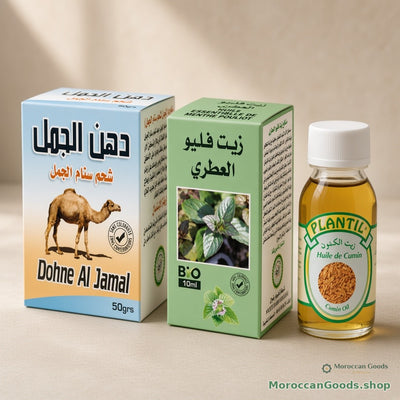
Cumin is one of Morocco's most used spices: on eggs, cooked fava beans and in tagines.
How to use: A pinch in cooking, or a little as a light infusion.
Ginger (الزنجبيل)
Ginger is part of ras el hanout, added to tagines and harira, or brewed as a warm drink with lemon and honey.
How to use: A pinch in cooking, or a little as a light infusion.
Saffron (الزعفران)
Taliouine saffron flavours tagines, rice and tea.
How to use: A pinch in cooking, or a little as a light infusion.
Cinnamon (القرفة)
Cinnamon is dusted on pastilla, seffa and coffee.
How to use: A pinch in cooking, or a little as a light infusion.
Mint (النعناع)
Mint is the symbol of Moroccan hospitality and the base of the mint tea served to guests.
How to use: One small spoon in a cup of hot (not boiling) water, 5–10 minutes, then strain. One or two cups a day.
Parsley (البقدونس)
Parsley is everywhere in Moroccan cooking: chermoula, tagines, salads, or as a juice with lemon.
How to use: As part of varied meals, in normal cooking amounts.
Thyme (الزعتر)
Wild thyme from the Moroccan mountains flavours winter tea, food and oil.
How to use: One small spoon in a cup of hot (not boiling) water, 5–10 minutes, then strain. One or two cups a day.
Anise (النافع (حبة حلاوة))
Anise flavours Moroccan bread and biscuits such as fekkas, and is also brewed as an infusion.
How to use: A pinch in cooking, or a little as a light infusion.
Black seed (حبة البركة (السانوج))
Black seed is sprinkled on bread and msemen; its oil is used in skin and hair care.
How to use: A pinch in cooking, or a little as a light infusion.
Cloves (القرنفل)
Cloves are part of ras el hanout, tagines and traditional perfumes.
How to use: A pinch in cooking, or a little as a light infusion.
The story of cumin at the Moroccan attar
- Cumin is one of the products Moroccans have known for generations, with ways of using it passed down in families.
- Names vary by region, between Arabic, Amazigh and Darija, but the customs are similar.
- Today the same traditional products come with clear labels and home delivery.
- In the souks of Fes, Marrakech and Essaouira, the attar (herbalist-grocer) displays herbs, spices and oils in sacks and bottles.
Tips for buying and storing cumin
- Choose a product with a clear origin and a label showing ingredients, size and date.
- A natural smell and colour are good signs; avoid anything that smells off or looks damp.
- Keep cumin in an airtight container away from light, heat and moisture.
- Always use a clean, dry spoon.
- Buy enough for a few weeks so it stays fresh and fragrant.
General precautions
- Pregnant or breastfeeding women, children and anyone on medication: ask a doctor first.
- Patch-test oils and skin products on a small area; avoid the eyes.
- Store cool and dry, out of reach of children.
- Moderation first; herbs do not replace a varied diet.
Please note: this is cultural and general content, not medical advice; see a doctor if needed.
Products from our shop
Cash on delivery across Morocco, delivery in 24–72 h, free from €13.75. Offer: 10% off 2 products, 15% off 3 or more.
Explore more: Natural herbs and spices · Packs & offers